As one of the leading nephrology training programs in the country, the Division of Nephrology and Hypertension at IU School of Medicine provides a challenging, interdisciplinary environment for fellows to excel in the field. The program’s strength lies in its balance; fellows manage a mixture of common and rare renal diseases due to the diverse population treated across the IU School of Medicine—Indianapolis campus.
Message from the Division Chief
Greetings! As director of the Division of Nephrology and Hypertension at Indiana University School of Medicine, I invite you to learn about our program. As you read through our website, I hope you will see the depth and breadth of all we have to offer. We excel in all three missions: education, clinical care and research, something only a few select training programs can honestly claim.
We have 52 faculty members: 33 clinician educators, eight NIH or VA funded MD scientists, and 11 PhD research faculty. We provide state-of-the-art clinical care at diverse hospitals, with a mixture of fellow-run and faculty-only services. Last year our division saw over 10,000 outpatients, and we provide care for 750 dialysis patients (over 150 on home therapies) and 200 new kidney transplant recipients.
We have over 13 million dollars in extramural funding, including the prestigious O’Brien Center that provides state of the art imaging and investigation of the kidney, the Indiana Center for Musculoskeletal Health, T32 NIH training grant, and the Indiana Clinical and Translational Sciences Institute (CTSI). Our research focuses on: 1) preventing or limiting the severity of kidney disease through research on acute kidney injury, diabetes, glomerulonephritis, genetics of kidney disease, hypertension and kidney stones, 2) treating kidney disease through research in CKD, dialysis modalities and transplantation and 3) minimizing the complications of advanced kidney disease through research on muscle wasting and nutritional disorders, hypertension in dialysis, neuropathy, altered gut microbiome, bone disease and cardiovascular complications of kidney disease. Learn more about our research.
Our faculty are leaders in national organizations — a testament to the excellence and reputation of our faculty. Come learn with us — I guarantee you will be exposed to state-of-the-art research, care of both simple and complex diseases including rare genetic and glomerular diseases, all forms of home and in-center dialysis, plasmapheresis and transplantation. All of this, in a friendly environment in the 15th largest city in the United States with an affordable cost of living!

Sharon M. Moe, MD, FASN
Stuart A. Kleit Distinguished Professor of Medicine
Associate Dean for Clinical and Translational Research
Director, Division of Nephrology
Co-Director, Indiana CTSI
Associate Dean for Clinical and Translational Research
Message from the Nephrology Fellowship Program Director
Welcome and thank you for your interest in the Indiana University School of Medicine Nephrology Fellowship program. We are delighted that you are considering to join our team and train with a diverse, vibrant and affable group of faculty that includes renowned clinicians, award-winning educators and internationally recognized researchers. While we are one of the largest divisions of nephrology in the country and offer an unparalleled breadth and depth of clinical experiences during your training, we are also dedicated to teamwork, camaraderie and fostering a supportive environment for you during your fellowship.
As you consider fellowship programs, it is important to select a program that not only provides a rich experience for training through exposure to a wide variety of diseases and patient populations but also meets your needs as an individual. We take pride in the support and flexibility our fellowship program offers that allows our fellows to grow personally, advance professionally and obtain the skills they will need to be successful in their future careers whether they decide to pursue additional training, start an academic nephrology career or join private practice. So check us out at this site, follow us on X at @IUKidney and of course feel to contact us for additional information. I look forward to meeting you.
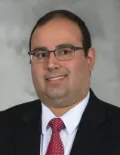
Ayman Hallab, MD
Assistant Professor of Clinical Medicine
Program Director
Associate Fellowship Program Director


Elizabeth B. Taber-Hight, DO
Assistant Professor of Clinical Medicine
Application Process
Applicants to the Nephrology Fellowship must have successfully completed a three-year internal medicine residency in an Accreditation Council for Graduate Medical Education (ACGME), ACGME-International (ACGME-I), or Royal College of Physicians and Surgeons of Canada (RCPSC) accredited program. Applicants who completed residency training in a non-ACGME or non-RCPSC accredited program will be considered on a case-by-case basis.
Applicants must have passing scores on all required United States Medical Licensing Examination (USMLE) examinations, including USMLE Step 3, and demonstrate a strong performance record during residency.
For applicants who are not U.S. citizens or permanent residents, the J-1 visa is the preferred visa for IU School of Medicine Graduate Medical Education (GME) training. Other visa categories may be considered on a case-by-case basis, subject to approval by the IU School of Medicine GME Office. Eligible visa categories include:
- J-2 with a valid Employment Authorization Document (EAD)
- H-4 with a valid Employment Authorization Document (EAD)
- H-1B for applicants:
- Currently training in the United States under H-1B status who are pursuing a change of employer (portability), or
- Currently in another eligible nonimmigrant status (such as F-1, H-4, J-1, or J-2) who are seeking a change of status to H-1B from within the United States
- O-1
- Other visa categories as approved by the IU School of Medicine GME Office
All employment offers extended to applicants who are not U.S. citizens or permanent residents are contingent upon obtaining the appropriate visa and employment authorization to work in the United States.
Applications are accepted exclusively through the Electronic Residency Application Service (ERAS). Applications are reviewed throughout the ERAS recruitment season. Selected applicants will be invited to participate in virtual interviews, which are typically conducted between August and October. Applicants selected for an interview will be contacted by the fellowship coordinator with scheduling information.
The Indiana University School of Medicine Nephrology Fellowship participates in the National Resident Matching Program (NRMP) Medical Specialties Matching Program, and all fellowship positions are filled through the Match.
Begin Nephrology Fellowship Training
To be considered for the Nephrology Fellowship, applicants must complete an application through the Electronic Residency Application Service (ERAS) and submit four letters of recommendation, one of which must come from the applicant’s residency program director.