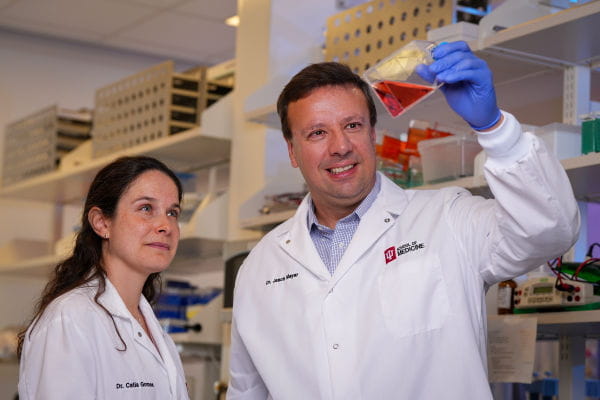
MPS-AD: Cellular brain models
Brain organoids, basic cellular clusters that mimic the structures of the human brain, are offering scientists insights never previously seen into the function of the human brain. When grown from the blood sample from an Alzheimer’s disease patient, they provide a powerful way to study the genetics behind the disease. The Microphysiological Systems to Advance Precision Medicine for Alzheimer’s Disease and Related Dementias (MPS-AD) center will develop these brain organoids to study various characteristics of Alzheimer’s disease and related dementias, such as neuroinflammation and vascular dysfunction. Researchers will also lead preclinical and pharmacological studies to accelerate drug discovery and development. The National Institute on Aging, part of the National Institutes of Health selected Indiana University as the home of one of two centers in the United States dedicated to developing stem-cell-based models of the human brain to better understand the underlying causes of Alzheimer’s disease and related dementias.