Einhorn Headshot

Curing Cancer, Cultivating Leaders

Forever associated with the cure for testicular cancer, Lawrence Einhorn, MD, has also built another formidable legacy – training 50 years of IU oncologists.

THE CHATTER OF a dozen young physicians — all cancer doctors in training — creates a steady hum around a conference table in the Indiana University Melvin and Bren Simon Comprehensive Cancer Center, as they await the start of a ritual that’s been repeated monthly for nearly 50 years.

On the room’s periphery, a trio of accomplished cancer faculty members slide into empty chairs. Finally, making his way to the head of the table and taking a seat like a patriarch at Thanksgiving, is Lawrence Einhorn. The chatter ends. The room falls silent.

Known around the world for developing the cure for testicular cancer, Einhorn commands respect without ever asking for it. But the individuals gathered this Monday afternoon for the exercise known as “journal club” — a critical discussion of the latest published research — owe him something more. Each one — faculty members around the edges and the young, budding oncologists — is part of his other legacy at IU: the Hematology-Oncology Fellowship Einhorn established in 1975.

Since its inception, the fellowship has trained 180 oncologists who now populate hospitals, cancer centers and clinics in 35 states and several countries. Its alumni include faculty physicians at the nation’s leading hospitals, cancer centers and research institutes. The program has created an interconnected network of oncology leaders whose careers sprouted from the same place.

“They all trace the roots of their own professional lives back to their experience here at Indiana University — and largely with Larry Einhorn,” said Patrick Loehrer, MD, a 1983 fellowship graduate who would go on to direct the IU Simon Comprehensive Cancer Center.


THE FELLOWSHIP WAS born of necessity. In the mid-1970s, IU had just three oncologists, including Einhorn, covering three downtown hospitals. “I realized this was just impossible and we needed to increase the herd size,” he said. Casually, Einhorn listened for internal medicine residents who were still undecided on a subspecialty and began touting oncology to them. But it was a tough sell.

“It was seen as depressing, with all the patients dying,” Einhorn said. “It’s very different today.”

At the time, only a handful of accredited cancer training programs existed nationwide. Einhorn decided IU needed one of its own. The result was a three-year fellowship in hematology and oncology. It had one trainee in its first year. These days, there are as many as 18 fellows in the program. The six new slots available each year draw around 500 applicants. Fewer than 10% get an interview.

“I would rank our program, in all modesty, as one of the top 10 programs in the United States, which is why we get so many applicants,” Einhorn said.

Both Einhorn, innovator of the cure for testicular cancer, and Loehrer, a globally recognized authority on thymoma, admit their younger selves wouldn’t even get an interview today. The current candidates have more published research under their belts and more extensive CVs.

“We didn’t have the type of credentials people have now,” Einhorn said. “They’re amazing.”

New fellows begin seeing cancer patients in their second week of training. Those with a specific field of interest, such as breast cancer or leukemia, are paired with a doctor in that area. The fellowship also features lectures, grand rounds, monthly meet-the-professor days and mentored research opportunities.

The journal club has remained a staple since the early days when fellows assembled in each other’s living rooms. Loehrer, now the Joseph W. and Jackie J. Cusick Professor of Oncology, recalls one meeting where the group discussed reports of a strange new illness afflicting patients called Gay-Related Immunodeficiency (or GRID) well before knowledge of the viral cause was known. It would later come to be known as AIDS.

He is the mentor of all mentors.

Ben Snyder, MD

Third-Year Fellow, Hematology-Oncology, IU School of Medicine

Yet, the journal club is more than coffee talk over heavy subjects. Today, a pair of fellows present two new journal articles, offering critiques while faculty experts chime in. Together, they dissect clinical trial data, including patient survival rates and adverse reactions, methodologies, conclusions and potential conflicts of interest. The critiques aren’t typically savage, but the club isn’t shy about calling out flawed methods, bias and overly favorable presentation of results.

From his seat at the head of the table, Einhorn tries to gently coax discussion from the fellows. He’s content to let faculty members like physicians Nasser Hanna, Bryan Schneider and Shadia Jalal — all fellowship graduates themselves — steer the conversation. But when needed, Einhorn doesn’t hesitate to point out serious issues. In one article, he noted a disclosure that the researchers had received help writing their paper from the drug’s manufacturer.

“First authors should write it themselves,” Einhorn said. “Industry does a great job, and they want to help patients, but they wear a different hat than academics do.”

For Jacob Edmisson, MD, a second-year fellow whose residency was at Washington University in St. Louis, watching Einhorn analyze science and spot key elements of clinical trial design has been revelatory. “This is someone who has been so successful in his career,” he said. “Being able to see how he dissects these things has definitely changed how I view and read articles.”

Ben Snyder, MD, a third-year fellow who completed his residency at IU, agrees. He said Einhorn’s skill lies in praising what’s strong and dissecting what’s not. “He is the mentor of all mentors,” Snyder said.
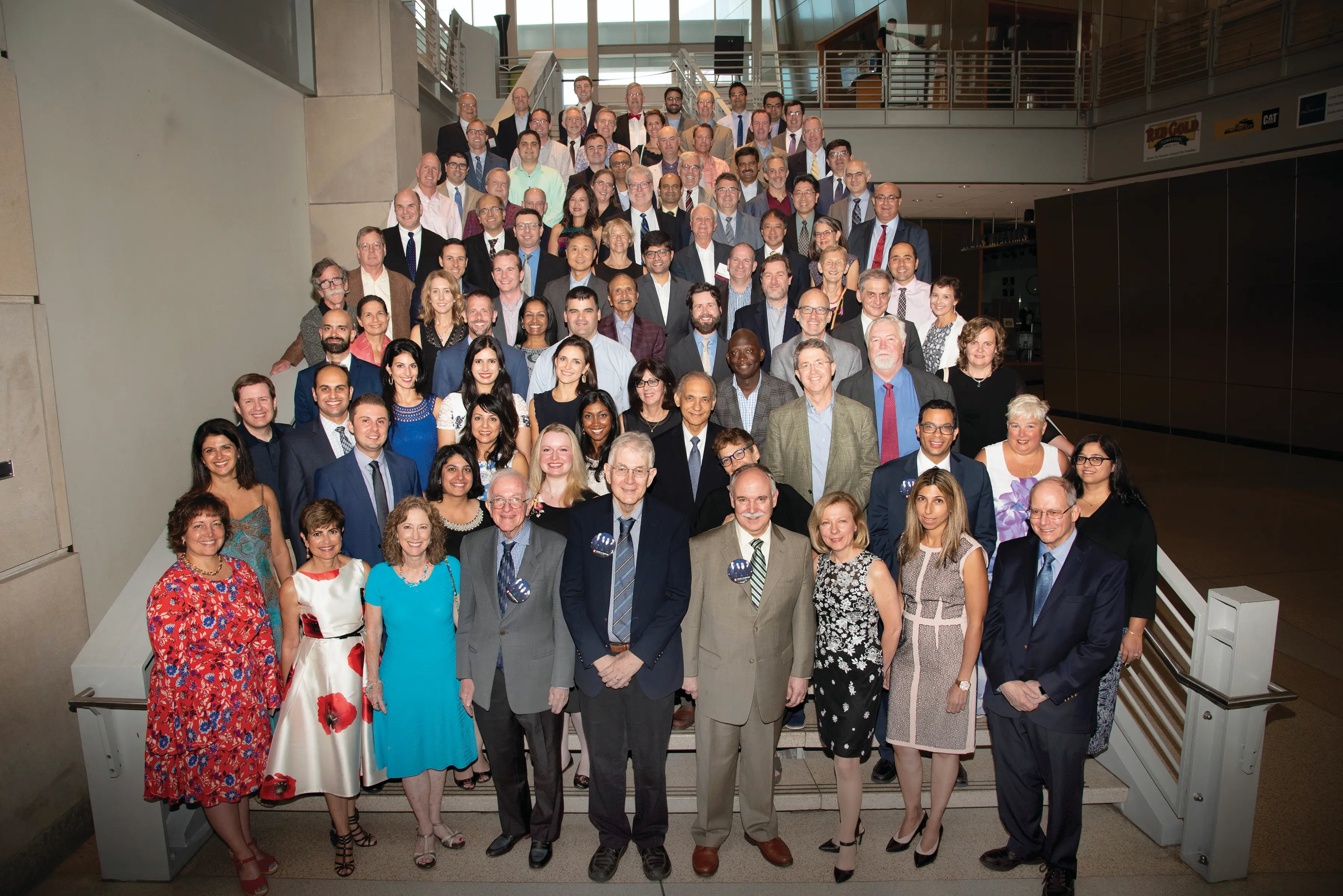
 

Group photo of students and faculty
At a 2018 celebration of the program, Einhorn is pictured with 100 fellows.


ROBIN ZON, MD, a 1998 fellowship graduate, would later be elected president of the American Society of Clinical Oncology, considered the world’s leading professional organization for physicians who care for people with cancer. Zon said she still scrutinizes research journals using the skills she learned in journal club — and cancer specialists recognize it as a signature of Einhorn’s training. In the oncology community, she said, “People know that if you come from IU, you’re well trained.”

Christopher Sweeney, MBBS, DHS, a 1999 fellowship graduate who now leads a cancer center in his native Australia, said the journal club helped him learn how to extract the truth. “The value is to really understand the core nuggets of the scientific advance while realizing the work that still needs to be done,” he said.

Beyond journal club, Sweeney said he learned research principles from Einhorn that still guide his work today. “I say without any hesitation: It was clearly the most influential times in my formative years as an oncologist and a cancer researcher and still guides how I practice as an oncologist and conduct research more than 25 years later,” he said.

It still guides how I practice as an oncologist and conduct research more than 25 years later.

Christopher Sweeney, MBBS, DHS

Hematology-Oncology Fellowship Graduate

Graduates of IU’s Hematology-Oncology Fellowship have gone on to roles in some of the nation’s most prestigious cancer centers — Mayo Clinic, MD Anderson and Dana-Farber, to name a few. However, the program has also helped IU fulfill its original goal: cultivating its own talent. Dozens of graduates have remained at IU, joining the faculty after completing their fellowship. That includes the cancer center’s first two directors — the late Steve Williams and Loehrer — as well as the current leaders of its breast cancer, lung cancer, prostate cancer, precision genomics and genitourinary programs.

Einhorn said that, aside from taking care of patients, mentoring fellows has brought the greatest joy of his career.

“When they show up, they still have the deer-in-the-headlights look that they might not belong. By the third year, they realize they are the real deal,” he said. “They can look in the mirror and realize the wizard is them.”


To explore ways you can support the IU Melvin and Bren Simon Comprehensive Cancer Center’s mission to prevent, treat and cure cancer, please contact Amber Kleopfer Senseny at akleopfe@iu.edu.