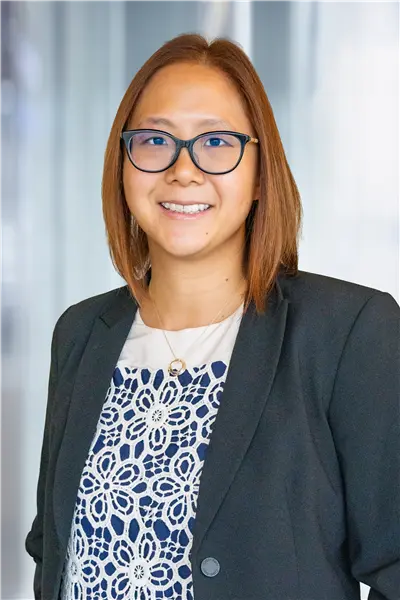
Sunnie Y. Wong, MD, PhD
Assistant Professor of Surgery
- Address
-
EZ H4-827
SPLA
IN
Indianapolis, IN - PubMed:
-

Bio
Sunnie Y. Wong, MD, PhD, currently serves as an Assistant Professor of Surgery, providing clinical care through both the Division of Plastic and Reconstructive Surgery and the Division of Acute Care Surgery. She received her combined medical and doctoral degrees in Biomedical Sciences from Tulane University School of Medicine.
Prior to joining Indiana University, Dr. Wong completed her general surgery residency at Stanford University, followed by a fellowship in burn and surgical critical care at the University of Southern California.
Her clinical practice focuses on burn and acute care surgery, encompassing comprehensive burn management, burn scar reconstruction, trauma, emergency general surgery, and surgical critical care.
Dr. Wong’s research centers on the immunologic response to injury, with an emphasis on regulatory T-cell biology, wound healing, and critical illness. She has authored more than 20 peer-reviewed publications in leading journals such as Nature, PLoS Genetics, Blood, and the Journal of Trauma and Acute Care Surgery.
Dr. Wong is a member of the American Burn Association and the American Association for the Surgery of Trauma.
Find Dr. Wong on Doximity.
Key Publications
Stanton EW, Manasyan A, Kim MI, Wong S, Johnson MB, Gillenwater J. Integrating Addiction Medicine Into Burn Care: Optimizing Pain Management in Stimulant-Positive Patients. J Burn Care Res. 2025;46(4):725–729.
https://academic.oup.com/jbcr/article-abstract/46/4/725/8236246
Smith AA, Ochoa JE, Wong S, et al. Prehospital tourniquet use in penetrating extremity trauma: Decreased blood transfusions and limb complications. J Trauma Acute Care Surg. 2019;86(1):43–51.
https://pubmed.ncbi.nlm.nih.gov/30358768/
Ibraheem K, Wong S, Smith A, et al. Computed tomography angiography in the “no-zone” approach era for penetrating neck trauma: A systematic review. J Trauma Acute Care Surg. 2020;89(6):1233–1238.
https://pubmed.ncbi.nlm.nih.gov/32890346/
Huang L, Wong S, Snyder EY, Hamblin MH, Lee JP. Human neural stem cells rapidly ameliorate symptomatic inflammation in early-stage ischemic-reperfusion cerebral injury. Stem Cell Res Ther. 2014;5(6):129.
https://stemcellres.biomedcentral.com/articles/10.1186/scrt519
Anguela XM, Sharma R, Doyon Y, et al., Wong SY. Robust ZFN-mediated genome editing in adult hemophilic mice. Blood. 2013;122(19):3283–3287.
https://pubmed.ncbi.nlm.nih.gov/24085764/
Li H, Haurigot V, Doyon Y, et al., Wong SY. In vivo genome editing restores haemostasis in a mouse model of haemophilia. Nature. 2011;475(7355):217–221.
https://pubmed.ncbi.nlm.nih.gov/21706032/
Simsek D, Brunet E, Wong SY, et al. DNA ligase III promotes alternative nonhomologous end-joining during chromosomal translocation formation. PLoS Genet. 2011;7(6):e1002080.
https://pubmed.ncbi.nlm.nih.gov/21655080/
| Year | Degree | Institution |
|---|---|---|
| 2025 | Fellowship | L.A. Downtown Medical Center |
| 2024 | Residency | Stanford Health Care |
| 2012 | MD | Tulane University |
| 2012 | PhD | Tulane University |
| 2007 | BA | University of California, Berkeley |
Dr. Wong’s early scientific work contributed to foundational advances in genome editing, liver-directed gene therapy, and stem cell–based disease modeling, with publications in Nature, PLoS Genetics, Blood, and Stem Cell Research & Therapy. Building on this translational background, her doctoral research examined the interplay between cell signaling, metabolism, and congenital disorders of glycosylation. Her current work investigates how visceral adipose tissue–derived regulatory T cells influence immune balance, tissue repair, and recovery in wound healing and critical illness. She is also interested in the physiology of burn shock, optimization of burn resuscitation, and the impact of substance use on outcomes in burn patients.
- Comprehensive burn care
- Burn scar reconstruction
- Trauma
- Emergency general surgery
- Surgical critical care