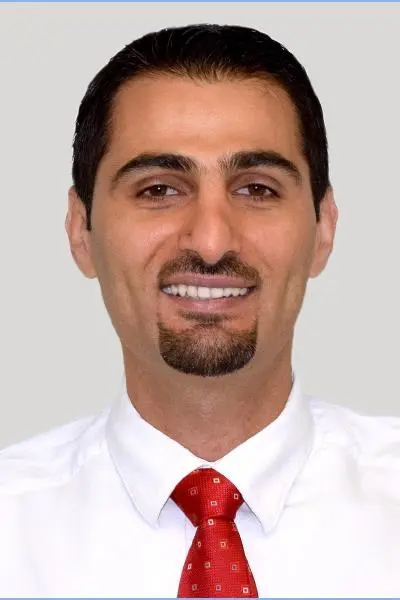
Ahmed K. Alomari, MD
Associate Professor of Clinical Pathology & Laboratory Medicine
Associate Professor of Clinical Dermatology
Director, Dermatopathology Fellowship Program
- Address
-
IU Health Pathology Laboratory
350 W 11th Street, Room 4064
Indianapolis, IN 46202 - PubMed:
-

Bio
Ahmed K. Alomari, MD is a Clinical Associate Professor of Pathology & Laboratory Medicine and Dermatology at the Indiana University School of Medicine and a nationally recognized academic dermatopathologist with expertise in neoplastic and inflammatory skin diseases. He serves as Program Director of the Dermatopathology Fellowship Program at Indiana University School of Medicine, the only accredited dermatopathology fellowship in the state of Indiana, where he leads educational program design, curriculum development, trainee assessment, recruitment, mentorship, and ACGME compliance. Through this role, he has contributed significantly to the training of future dermatopathologists, pathologists, dermatologists, and physician-scientists, while strengthening dermatopathology education at both the institutional and national levels.
Dr. Alomari is board-certified in Dermatopathology, Anatomic Pathology, and Clinical Pathology. He earned his medical degree with honors from Jordan University of Science and Technology, followed by residency training in Anatomic and Clinical Pathology at Yale University School of Medicine, where he also served as Chief Resident. He subsequently completed fellowship training in Dermatopathology at the University of Michigan, where he developed his subspecialty focus in complex cutaneous pathology and advanced diagnostic dermatopathology.
At Indiana University, Dr. Alomari serves as a full-time academic dermatopathologist and provides diagnostic services for Indiana University Health–affiliated hospitals, Eskenazi Health, and the Roudebush VA Medical Center, while also serving as a regional and national consultative dermatopathologist for challenging skin pathology cases. As part of Indiana’s only academic and referral dermatopathology unit, he routinely evaluates complex inflammatory, melanocytic, mesenchymal, adnexal, and other diagnostically challenging neoplastic skin diseases. His clinical mission focuses on improving diagnostic precision, accelerating timely patient care, and advancing evidence-based dermatopathology practice.
Dr. Alomari has demonstrated sustained excellence in clinical service. In addition to routine clinical practice, he plays a major consultative role in multidisciplinary patient care, frequently contributing to melanoma tumor boards, dermatology grand rounds, and other interdisciplinary conferences involving complex skin cancers and challenging inflammatory skin disorders.
A major area of Dr. Alomari’s institutional leadership has been advancing modern dermatopathology practice through integration of molecular diagnostics, immunohistochemistry, and emerging digital and computational pathology tools into routine patient care. He has played a central role in leading the division’s transition toward contemporary, molecularly informed dermatopathology by helping guide the appropriate selection, interpretation, and integration of molecular testing into the classification and diagnosis of skin tumors. His expertise is frequently sought by colleagues for complex molecular-pathologic correlation and contemporary diagnostic classification of neoplastic skin disease. His academic interests also include artificial intelligence–based image analysis, tumor microenvironment characterization, and digital pathology applications aimed at improving diagnostic accuracy and workflow efficiency.
In addition to his clinical expertise, Dr. Alomari has held important leadership roles during periods of institutional growth and transition. He previously served as Interim Division Director of Dermatopathology, where he ensured continuity of divisional clinical operations, supported faculty recruitment, mentored junior faculty, recruited support staff, and strengthened quality-focused educational infrastructure. He also served as Interim Associate Director for Anatomic Pathology within the Molecular Pathology Division, where he helped oversee clinical molecular operations, reviewed QA/QC documentation for regulatory compliance, signed out clinical molecular reports, and contributed to laboratory leadership continuity.
A particularly important contribution to Indiana University’s dermatopathology service has been Dr. Alomari’s leadership of the Dermatopathology Consensus and Quality Control Conference, which he formally established and continues to lead as a major diagnostic and educational initiative within the division. This daily conference functions as a high-level quality assurance and consensus-building forum in which challenging inflammatory and neoplastic skin biopsies are reviewed in real time with faculty, fellows, residents, and other trainees. Through expert consultation, clinicopathologic discussion, and multi-headed microscope review, this conference promotes diagnostic accuracy, improves interobserver agreement, supports mentorship of junior faculty and trainees, and serves as a central quality-control pillar within the dermatopathology division. It has become an important mechanism for strengthening both patient care and academic learning while fostering thoughtful diagnostic collaboration in complex cases.
As an educator and mentor, Dr. Alomari has played a major role in training medical students, pathology residents, dermatology residents, dermatopathology fellows, junior faculty, and visiting international scholars. His trainees have gone on to establish dermatopathology services nationally and internationally, reflecting the broader impact of his mentorship and educational leadership.
Dr. Alomari’s scholarly work is closely integrated with his clinical mission and focuses on improving diagnostic accuracy and understanding the biologic behavior of skin disease. His academic interests include melanocytic neoplasms, molecular dermatopathology, cutaneous mesenchymal tumors, inflammatory dermatopathology, tumor microenvironment characterization, and AI-assisted pathology. He has authored numerous peer-reviewed publications in leading journals in pathology, dermatopathology, and dermatology, and his research includes both investigator-initiated and collaborative projects involving molecular diagnostics, computational pathology, and translational oncology.
Nationally and internationally, Dr. Alomari has established a strong reputation through sustained scholarship, invited presentations, and leadership in professional organizations. He serves on the Executive Committee of the International Society of Dermatopathology, the Program Committee of the American Society of Dermatopathology (ASDP), the Economic Affairs Committee of the College of American Pathologists, and the Test Development and Advisory Committee of the American Board of Pathology. He is also Director of the ASDP Laboratory Proficiency Testing Program, a nationally important program linked to dermatopathology laboratory quality and professional standards. In addition, he serves on the Editorial Board of the Journal of Cutaneous Pathology and is actively involved in peer review and academic service across multiple pathology and dermatology journals.
Dr. Alomari has delivered invited lectures nationally and internationally on molecular dermatopathology, melanocytic neoplasms, inflammatory dermatopathology, diagnostic pitfalls, and emerging advances in skin pathology. His work reflects a sustained commitment to excellence in patient care, diagnostic innovation, mentorship, scholarship, and professional leadership. Through his clinical, educational, and academic contributions, he continues to advance dermatopathology practice and strengthen Indiana University School of Medicine’s regional, national, and international impact.
Key Publications
https://www.scopus.com/authid/detail.uri?authorId=56432529800
Alomari AK, Miedema J, Carter M, Harms P, Lowe L, Durham A, Fullen D, Patel RM, Hristov A, Chan M, Wang M, Andea A. DNA copy number changes correlate with clinical behavior in melanocytic neoplasms: proposal of an algorithmic approach. Modern Pathol. 2020 Jul;33(7):1307-1317.
Al-Rohil RN, Moore JL, Patterson NH, Nicholson S, Verbeeck N, Claesen M, Muhammad JZ, Caprioli RM, Norris JL, Kantrow S, Compton M, Robbins J, Alomari AK. Diagnosis of melanoma by imaging mass spectrometry: Development and validation of a melanoma prediction model. J Cutan Pathol. 2021 Dec;48(12):1455-1462.
Alomari AK, Tharp AW, Umphress B, Kowal RP. The Utility of PRAME Immunohistochemistry in the Evaluation of Challenging Melanocytic Tumors. J Cutan Pathol. 2021 Sep;48(9):1115-1123.
Alomari A, Subtil A, Owen CE, McNiff JM. Solitary and multiple tumors of follicular infundibulum: a review of 168 cases with emphasis on staining patterns and clinical variants. J Cutan Pathol. 2013 Jun;40(6):532-7.
Alomari A, McNiff J. The Significance of Eosinophils in Hypertrophic Lichen Planus. Journal of Cutaneous Pathology. J Cutan Pathol. 2014 Apr;41(4):347-52.
Alomari AK, Glusac EJ, McNiff JM. p40 is a more specific marker than p63 for cutaneous poorly differentiated squamous cell carcinoma. J Cutan Pathol. 2014 Nov;41(11):839-45.
Alomari AK, Klump V, Neumeister V, Ariyan S, Narayan D, Lazova R. Comparison of the expression of vimentin and actin in spitz nevi and spitzoid malignant melanomas. Am J Dermatopathol. 2015 Jan;37(1):46-51
Cohen JV, Alomari AK, Vortmeyer AO, Mahajan A, Chiang VL, Kluger HM. Melanoma brain metastasis pseudoprogression after pembrolizumab treatment. Cancer Immunol Res. 2016 Mar;4(3):179-82.
Alomari AK, Brown N, Andea AA, Betz BL, Patel RM. Cutaneous syncytial myoepithelioma: A recently described neoplasm which may mimic nevoid melanoma and epithelioid sarcoma. J Cutan Pathol. 2017 Oct;44(10):892-897.
Alrabadi N, Gibson N, Curless K, Cheng L, Kuhar M, Chen S, Warren SJP, Alomari AK. Detection of driver mutations in BRAF can aid in diagnosis and early treatment of dedifferentiated metastatic melanoma. Mod Pathol. 2019 Mar;32(3):330-337.
Simo OC, Warren SJP, Mark L, Hoffmann K, Alomari AK. CD8 Positive Lymphomatoid Papulosis (Type D): Some Lesions May Lack CD30 Expression and Overlap Histologically with Mycosis Fungoides. Int J Dermatol. 2019 Jul;58(7):800-805.
Oberlin KE, Rahnama-Moghadam S, Alomari AK, Haggstrom AN. Drug Rash with Eosinophilia and Systemic Symptoms (DRESS): Pediatric Case Series and Literature Review. Pediatr Dermatol. 2019 Nov;36(6):887-892.
Alrabadi N, Haddad R, Alomari AK. Detection of Gene Mutations in Liquid Biopsy of Melanoma Patients: Overview and Future Perspectives. Curr Treat Options Oncol. 2020 Feb 11;21(3):19.
Clark HE, Huang YM, Vance GH, Alomari AK. Fatal melanoma with a novel MYO5A-BRAF fusion and small associated conventional nevus: A Case Report and Review of Literature. J Cutan Pathol. 2022 Sep;49(9):808-812. PMID: 35596628
Couetil J, Liu Z, Huang K, Zhang J, Alomari AK. Predicting melanoma survival and metastasis with interpretable histopathological features of machine learning model. Front Med (Lausanne). 2023 Jan 6;9:1029227. PMID: 36687402
Alkashash A, Samiei A, Alomari AK. The new and old in superficial mesenchymal tumors with uncertain origin and/or melanocytic differentiation. Semin Diagn Pathol. 2023 Jul;40(4):258-266. PMID: 37120349
Warren SJ, Alomari AK. Utility of sequencing for ATP6AP1 and ATP6AP2 to distinguish between atypical granular cell tumor with junctional component and melanoma. J Cutan Pathol. 2023 Nov;50(11):1014-1019. PMID: 37565535
Alomari AK, Harms PW, Andea AA, Warren SJ. MAP2K1-mutated melanocytic tumors have reproducible histopathologic features and share similarities with melanocytic tumors with BRAF V600E mutations. J Cutan Pathol. 2023 Dec;50(12):1083-1093. PMID: 37565534
Davis FM, Bowling J, Khanchandani AT, Larkins MC, Tumin D, Badami S, Alomari AK, Chen S, Vora M, Zhou Y. Development of a Scoring Rubric Assessing Medical Students' Explanations of Pathology Reports. Arch Pathol Lab Med. 2024 May 10. PMID: 38724033
Li A, Warren SJ, Umphress BA, Alomari AK. Histopathologic, genomic, transcriptomic, and functional characteristics of eight melanocytic tumors with BRAF fusions showing stronger MAPK pathway activation compared to BRAF V600E tumors. J Cutan Pathol. 2024 Nov;51(11):899-910. PMID: 39171578
Arends MJ, Velasco-Herrera MDC, Cheema S, Wong K, Boccacino JM, Vermes I, Roberts K, Anderson E, van der Horst MPJ, de Saint Aubain N, Alomari AK, Monteagudo C, Billings SD, Frew D, Clarke E, Merchant W, Rajan N, Ferguson P, Mogler C, Ferreira I, Brenn T, van der Weyden L, Adams DJ. Exploring the driver events of eccrine poromas and porocarcinomas: A retrospective, cross-institutional study of 54 cases. Br J Dermatol. 2024 Nov 15:ljae447. PMID: 39546556
DeSimone MS, Odintsov I, Tsai HK, Dickson BC, Alomari AK, Hornick JL, Fletcher CDM, Papke DJ Jr. Epithelioid Fibrous Histiocytoma Is on a Continuum With Superficial ALK -rearranged Myxoid Spindle Cell Neoplasm : A Clinicopathologic Series of 35 Cases Including Alternate RET and NTRK3 Fusions. Am J Surg Pathol. 2024 Dec 1;48(12):1568-1579. PMID: 39329254
Dehner CA, Pearson H, Almohsen SS, Lo YC, Thangaiah JJ, Torres-Mora J, Guo RR, Baker JC, Folpe AL, Alomari AK, Dickson BC, Billings SD, Michal M, Demicco EG, Fritchie KJ, Chrisinger JSA. Acral Fibrochondromyxoid Tumor: A Clinicopathologic and Molecular Genetic Study of 37 Cases. Mod Pathol. 2024 Dec;37(12):100599. PMID: 39181449
Li A, Umphress B, Dehner C, Jones R, Toral K, Warren S, Alomari AK. Genomic and Transcriptomic Characterization of Protein Kinase C Fusion Melanocytic Neoplasms With Distinctive Hypopigmented Histomorphology: A Single-Institution Study. J Cutan Pathol. 2025 Jun;52(6):432-441. PMID: 40109002
Umphress B, Li A, Kuhar M, Kowal R, Alomari AK, Baldridge L, Ross AJ, Warren SJ. NTRK Fusions in Xanthogranuloma, a Clinicopathologic and Molecular Analysis of 23 Cases. Am J Surg Pathol. 2025 Jul 1;49(7):639-645. PMID: 40162548
Warren SJ, Xue GR, Zhou HM, Alomari AK, Turner MJ. Melanoma microsatellites exhibit a metastatic signature by spatial transcriptomics and overexpress mediators of immune evasion. Virchows Arch. 2025 Jul 28. PMID: 40717170
Legrand M, Louveau B, Osio A, Tallet A, Calonje E, Scoazec JY, de la Fouchardiere A, Tirode F, Von Deimling A, Busam K, Shah A, Flaman A, Jouenne F, Mourah S, Pissaloux D, Lantuejoul S, French CA, Goto K, Cribier B, Dehner CA, Alomari AK, Fletcher CD, Hanna J, Macagno N, Battistella M, Kervarrec T. Primary cutaneous NUT adnexal carcinoma: morphologic, genetic and methylation analysis of seven new cases with comparison to extracutaneous NUT carcinoma and NUTM1-rearranged porocarcinoma. Histopathology. 2025 Sep;87(3):375-387. PMID: 40125640
Cheema S, van der Weyden L, Wong K, Del Castillo Velasco-Herrera M, Billington J, Vermes I, Anderson E, Allen L, de Saint Aubain N, van der Horst MPJ, Alomari AK, Mogler C, Monteagudo C, Frew D, Billings SD, Arends MJ, Ferreira I, Brenn T, Adams DJ. Comprehensive profiling of the mutational landscape of hidradenoma papilliferum validates key role of alterations in the phosphoinositide 3-kinase/AKT pathway. Br J Dermatol. 2025 Oct 17;193(5):1004-1007. PMID: 40580495
Couetil JL, Liu Z, Chen C, Alomari AK, Huang K, Zhang J, Johnson TS. Deep Transfer Learning Links Benign Glands to Prostate Cancer Progression via Transcriptomics. Genomics Proteomics Bioinformatics. 2025 Nov 29. PMID: 41317378
Friedman BJ, Kis O, Shaw B, Cloutier JM, Yan S, Lefferts JA, Alomari AK, Dehner CA, Li A, Moy A, Linos K. Sclerosing melanocytic tumors with MAP2K1 in frame deletions and 15q gains: A distinctive pathway of nevogenesis with reproducible morphology. Virchows Arch. 2025 Dec 19. PMID: 41417041.
Sousa-Squiavinato ACM, Billington J, Del Castillo Velasco-Herrera M, Wong K, Cheema S, Vermes I, Anderson E, Vasisht A, Harms PW, Clarke EL, Merchant W, Weigelt MA, Billings SD, Monteagudo C, Alomari AK, Arends MJ, Wiedemeyer K, Ferreira I, Brenn T, van der Weyden L, Adams DJ. Cellular neurothekeoma is driven by copy number deletions, providing potential diagnostic and therapeutic avenues. Br J Dermatol. 2026 Feb 18;194(3):593-595. PMID: 41365817.
Dehner CA, Honaker EC, Abu-Salah AK, Umphress BA, Mopuri R, Fadra N, Piatkowski B, Kowal R, Warren SJ, Al-Omari A, Guo R. Clinicopathologic and molecular characterization of a series of sporadic trichoblastic neoplasms. Virchows Arch. 2026 Mar;488(3):489-498. PMID: 41203975
Reyes Barron C, Geiersbach KB, Alomari AK, Deak KL, Golem S, Williams ES, Aypar U, Zou YS, Wei L, Chaubey A, Sahajpal N, Kolhe R, Love TM, Prokop L, Iqbal MA. Clinical Utility of Copy Number Abnormality Analysis in the Evaluation of Melanocytic Lesions for Diagnosis and Prognosis: An Evidence-Based Review from the Cancer Genomics Consortium Working Group for Melanocytic Lesions. Genes (Basel). 2026 Mar 18;17(3):331. PMID: 41898865.
Wiedemeyer K, Del Castillo Velasco-Herrera M, Billington J, Cheema S, Wong K, Sousa-Squiavinato ACM, Vermes I, Anderson E, Khan M, Clarke EL, Merchant W, Weigelt MA, Billings SD, Arends MJ, Alomari AK, Monteagudo C, Ferreira I, Brenn T, van der Weyden L, Adams DJ. Novel fusion gene THBS1::ERBB2 drives a subset of superficial acral fibromyxomas. Br J Dermatol. 2026 Mar 23:ljag100. PMID: 41869708.
Vedachalam S, Freihat M, Alomari AK, Sears CR, Al Nasrallah N. The concurrence of lung malignancies and organizing pneumonia. Front Oncol. 2026 Jan 16;15:1733651. doi: 10.3389/fonc.2025.1733651. PMID: 41626164
| Year | Degree | Institution |
|---|---|---|
| 2016 | Fellowship | University of Michigan |
| 2015 | Residency | Yale University |
| 2008 | MD | Jordan University of Science and Technology |
Dermatopathology, Pigmented lesions, Cutaneous Oncology, Melanoma
Dermatopathology, Pigmented lesions, Cutaneous Oncology, Melanoma
Desc: 3rd place in oral presentations
Scope: National
Date:
Desc: 2nd place in oral presentations
Scope: National
Date:
Desc: Gold Humanism Honor Society
Scope:
Date: