Chai Lab

Ya Chai, PhD, is a neuroscientist whose research focuses on the interplay between sleep disturbances, depressive symptoms and brain dynamics in aging and Alzheimer's disease (AD). Her work spans both mechanistic and translational studies, integrating neuroimaging, symptom phenotyping and biomarker analysis to better understand and intervene in cognitive and emotional dysfunctions.

Research Projects


Targeting Sleep and Anxious–Depressive Symptoms as Modifiable Risk Factors in Alzheimer’s Disease

This research addresses a critical gap in Alzheimer’s disease (AD) science by reframing anxious–depressive symptoms (ADS) and sleep disturbances (SD) not merely as clinical outcomes but also potential modifiable risk factors contributing to AD pathogenesis. 
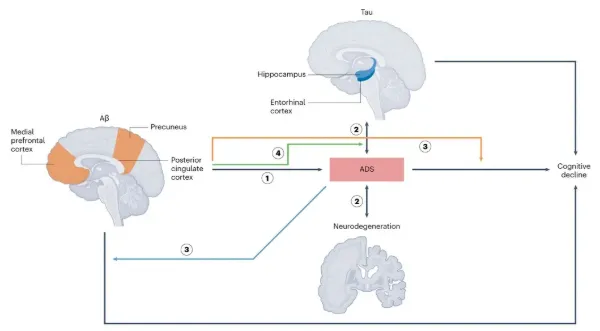
anxious-depressive symptom-facilitated alzheimer's disease progression model

ADS-facilitated AD progression model

In an invited review in Nature Mental Health, we systematically examined how ADS and SD interact with core AD biomarkers — amyloid-β, tau and neurodegeneration — within the AT(N) research framework. We proposed integrative models illustrating how these symptoms may both reflect and drive neuropathological changes, influencing cognitive trajectories even in the preclinical and prodromal stages of AD.

This work provides a biologically informed rationale for targeting ADS and SD in AD prevention and intervention strategies and emphasizes the need for precsion medicine approaches that align symptom profiles with biomarker-defined disease states. We advocate for a paradigm shift that integrates neuropsychiatric phenotyping into early detection pipelines to improve patient outcomes and reduce disease burden through timely, targeted interventions.
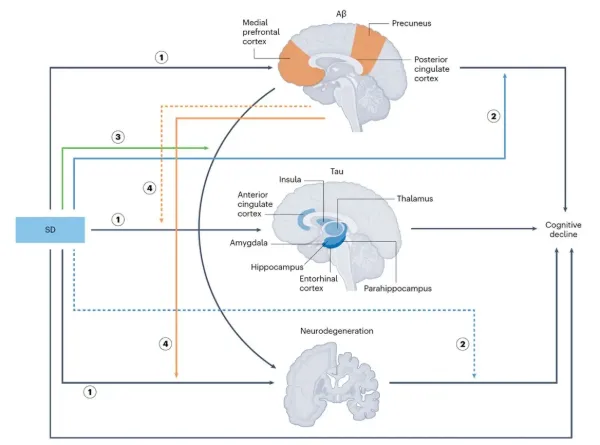
sleep disturbance-facilitated alzheimer's disease progression model

SD-facilitated AD progression model
 

Neural Basis of Sleep Deprivation’s Antidepressant Effects

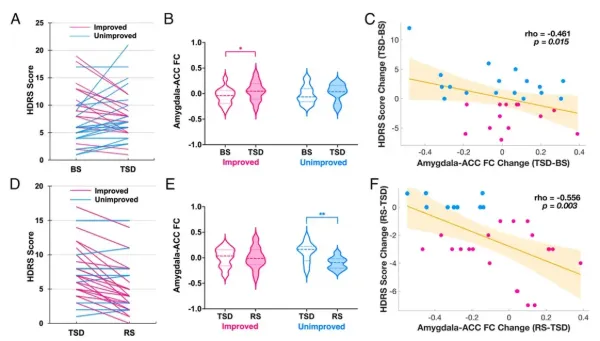
This research uncovers a long-sought neural mechanism underlying the rapid antidepressant effects of total sleep deprivation (TSD) — a phenomenon observed clinically for decades but poorly understood at the neurobiological level. Using resting-state functional MRI, we demonstrated that a single night of TSD significantly enhances functional connectivity between the amygdala and the anterior cingulate cortex (ACC), a core circuit involved in mood regulation. Importantly, this increased amygdala–ACC coupling was associated with improved mood in both healthy individuals and patients with major depressive disorder (MDD).

model of TSD-induced increases in amygdala–ACC connectivity and its association with mood changes from baseline to sleep deprivation in healthy individuals

TSD-induced increases in amygdala–ACC connectivity (A, B) and its association (C) with mood changes from baseline to sleep deprivation in healthy individuals

These findings mark a significant advance in the field of sleep and depression research. They not only validate the amygdala–ACC circuit as a key neural substrate for TSD’s mood-elevating effects but also highlight it as a potential target for developing rapid-acting antidepressant interventions. This work, published in PNAS and widely featured across scientific and social media platforms, offers a novel framework for understanding and manipulating brain circuits to alleviate depression.

model showing changes in depressive mood, amygdala–ACC connectivity and their association with sleep deprivation in depressed individuals

Changes in depressive mood (A, D), amygdala–ACC connectivity (B, E), and their association (C, F) from baseline to sleep deprivation (A–C) and from sleep deprivation to recovery sleep (D–F) in depressed individuals


Functional Connectomics in Depression: Toward Personalized Network-Guided Interventions

This invited review addresses a critical need in treating major depressive disorder (MDD): overcoming the limitations of one-size-fits-all approaches by aligning therapeutic strategies with individual neurobiological profiles. Despite decades of clinical use, many antidepressant interventions continue to yield suboptimal outcomes, characterized by low response rates, frequent relapses and delayed symptom relief. A major contributing factor is the mismatch between treatment strategies and the heterogeneous symptomatology and neural network organization seen in depression.

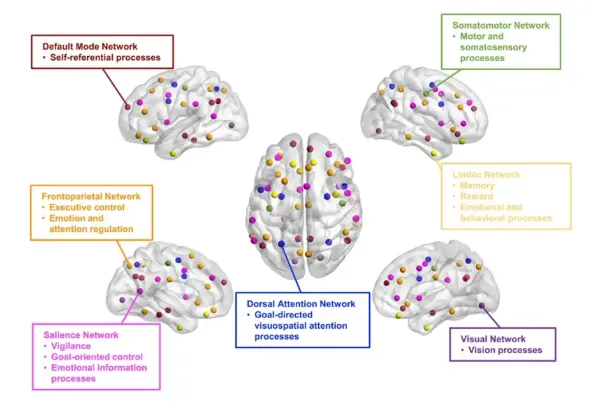
Human functional brain networks

Human functional brain networks

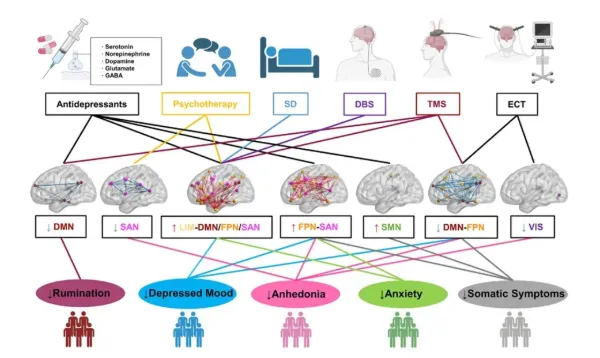
To address this, we introduce a connectome-based framework for classifying depression into biologically informed subtypes. Drawing from emerging evidence, we demonstrate that specific depressive symptoms — such as anhedonia, rumination, anxiety, somatic distress — are linked to dysregulation in distinct brain networks, including the default mode network (DMN), frontoparietal network (FPN) and salience network (SAN). We further show that treatment modalities like pharmacotherapy, psychotherapy, neuromodulation and sleep deprivation modulate these networks in symptom-specific ways.

A central feature of this work is a novel 3D conceptual model that integrates brain connectivity, patterns, symptom dimensions, and treatment mechanisms. This model offers a theoretical framework for precision psychiatry — facilitating targeted, multi-modal interventions tailored to the neural signatures of individual patients. Ultimately, this work advocates for a shift toward personalized, connectome-guided treatment strategies that could improve treatment effectiveness outcomes and support earlier intervention in high-risk populations.

Hypothetical model of symptom-specific, network-guided treatments

Hypothetical model of symptom-specific, network-guided treatments


Dissociating Neural and Cognitive Recovery After Sleep Deprivation

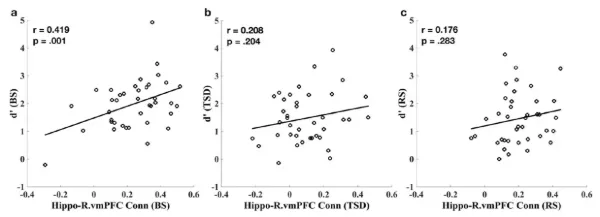
This study examines the neurocognitive impact of acute sleep deprivation and the extent to which recovery sleep reverses these effects. Using a within-subjects design and resting-state fMRI, we found that two nights of recovery sleep restored functional connectivity between the hippocampus and default mode network (DMN) — a key circuit implicated in memory consolidation. However, this neural recovery did not translate into full cognitive restoration: participants continued to exhibit impaired episodic memory performance.

Hippocampal connectivity changes following sleep deprivation and normal sleep

Hippocampal connectivity changes following sleep deprivation (a) and normal sleep (b)

These findings reveal a dissociation between brian network normalization and behavioral recovery, challenging the assumption that cognitive function rebounds in tandem with neural connectivity. The results highlight the lasting effects of sleep loss on memory and supports the need for early intervention strategies in at-risk populations, such as shift workers, older adults, and individuals with chronic sleep disturbance. This work also highlights the hippocampus–DMN circuit as a potential biomarker for assessing neurofunctional resilience — or vulnerability — of memory systems under sleep pressure.

Correlation between hippocampal connectivity and episodic memory performance after baseline sleep, total sleep deprivation, and recovery sleep

Correlation between hippocampal connectivity and episodic memory performance after baseline sleep (a), total sleep deprivation (b), and recovery sleep (c)


Recent Publications

Chai Y, Shokri-Kojori E, Saykin AJ, Yu M. Anxious-Depressive Symptoms and Sleep Disturbances across the Alzheimer's Disease Spectrum. Nat. Mental Health 2025; 3:594–612.

Chai Y, Gehrman P, Yu M, Mao T, Deng Y, Rao J, Shi H, Quan P, Xu J, Zhang X, Lei H, Fang Z, Xu S, Boland E, Goldschmied JR, Barilla H, Goel N, Basner M, Thase ME, Sheline YI, Dinges DF, Detre JA, Zhang X, Rao H. Enhanced amygdala-cingulate connectivity associates with better mood in both healthy and depressive individuals after sleep deprivation. Proc Natl Acad Sci USA. 2023; 120(26):e2214505120.

Chai Y, Sheline YI, Oathes DJ, Balderston NL, Rao H, Yu M. Functional connectomics in depression: insights into therapies. Trends Cogn Sci. 2023; 27(9):814-832.

Chai Y, Fang Z, Yang FN, Xu S, Deng Y, Raine A, Wang J, Yu M, Basner M, Goel N, Kim JJ, Wolk DA, Detre JA, Dinges DF, Rao H. Two nights of recovery sleep restores hippocampal connectivity but not episodic memory after total sleep deprivation. Sci Rep. 2020; 10(1):8774.

MyNCBI Bibliography

Principal Investigator

48049-Chai, Ya

Ya Chai, PhD

Assistant Research Professor of Radiology & Imaging Sciences

Read Bio