The Health Excellence Achieved through Learning Health Systems Research (HEALeR) Collaborative recently hosted their second biennial conference on Thursday, Nov. 6, which focused on addressing key areas in ethics and implementation science for learning health systems (LHS). Nearly 200 researchers, trainees and clinicians attended the one-day event, representing institutions from all over the country.
The day kicked off with opening remarks from Brownsyne Tucker Edmonds, MD, MPH, MS, vice president and chief health impact officer for Indiana University Health, followed by the morning’s welcome given by Dennis Murphy, president and CEO of IU Health. Murphy discussed his vision for making Indiana one of the healthiest states, emphasizing the importance of service and the moral imperative underlying healthcare work, urging attendees to keep in mind the significance of their daily efforts to improve patient experiences. He also underscored his role, and the role of other healthcare leaders, in visiting system sites and addressing concerns from clinicians and patients head-on, reminding attendees, “You have to go out and listen, explain and be accountable.”
Murphy introduced the morning’s keynote speaker, Ruth Faden, PhD, MPH, founder of the Johns Hopkins Berman Institute of Bioethics and the Philip Franklin Wagley Professor of Biomedical Ethics. Faden discussed the ethical conditions for the LHS model, focusing on addressing health inequities and the importance of effective implementation, in addition to evidence generation. She introduced the concept of “fit for purpose” in human subjects oversight, suggesting ways for researchers and clinicians to work within current regulations to advance comparative effectiveness research, while respecting patient autonomy and the need to balance the benefits and risks of research participation. “The idea is that we have a common purpose, all of us, to improve the fairness and quality of healthcare,” Faden remarked.
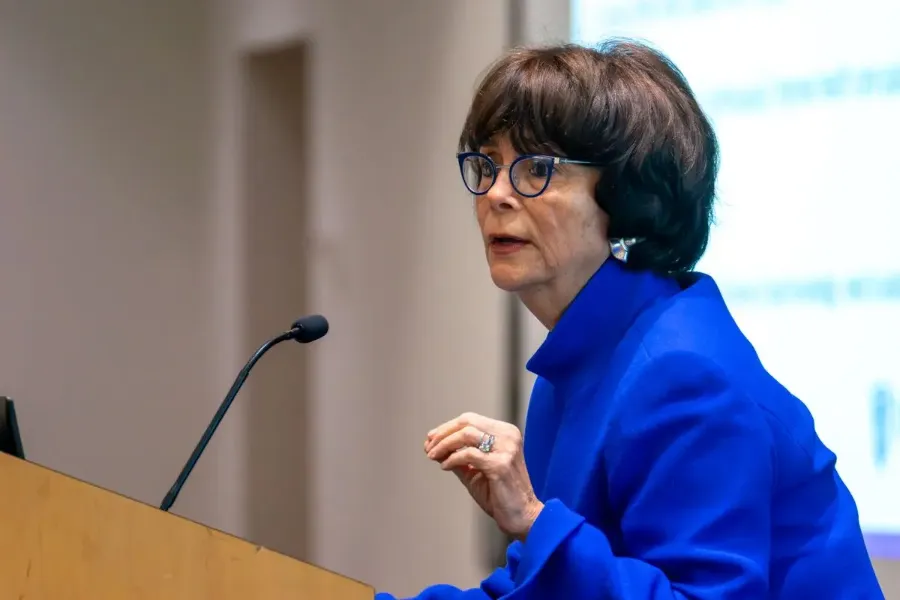
Faden’s keynote was followed by a panel on ethics, consent and navigating the line between quality improvement and research, moderated by Amy Martin, DBe, MA, vice president of clinical and organizational ethics at IU Health. Panelists included Faden; Tucker Edmonds; Peter Schwartz, MD, PhD, professor of medicine and bioethics at IU School of Medicine; Amy Waltz, JD, CIP, research integrity officer for Indiana University; and Kristyn Looney, JD, assistant general counsel for IU Health. Clinicians and researchers, including participants from the audience, shared their perspectives on minimal risk in three case studies that Faden presented, considering factors such as usual care, patient preferences and the potential impact of the research. The panel highlighted the complexity of determining minimal risk, emphasizing the need for a nuanced approach to human subjects oversight in LHSs. Looney commented, “There’s a way to get to ‘yes’, but how we get to that ‘yes’ matters,” highlighting the importance of continuously taking into account patients’ perspectives and needs and fostering and maintaining trust when conducting LHS research.
The second panel of the morning delved into how to make the case for the learning health system as essential infrastructure, led by Titus Schleyer, PhD, the director of LHS informatics at Regenstrief Institute. Panelists included Jiang Bian, PhD, chief data scientist at IU Health; Dawn Bravata, MD, professor of medicine at IU School of Medicine; Randall Grout, MD, MS, director of clinical informatics and LHS at Eskenazi Health; Michele Saysana, MD, executive associate dean of clinical affairs at IU School of Medicine; and Peter Embí, MD, MS, professor of biomedical informatics at Vanderbilt University Medical Center. The group concurred that supporting both data and people is key for the LHS to be successful, as these are essential and core components for driving continuous learning and impact. “Running a health system means caring for patients today, and caring for them in the future,” Embí commented, “[LHS] is not a side project — this is an operational necessity.”
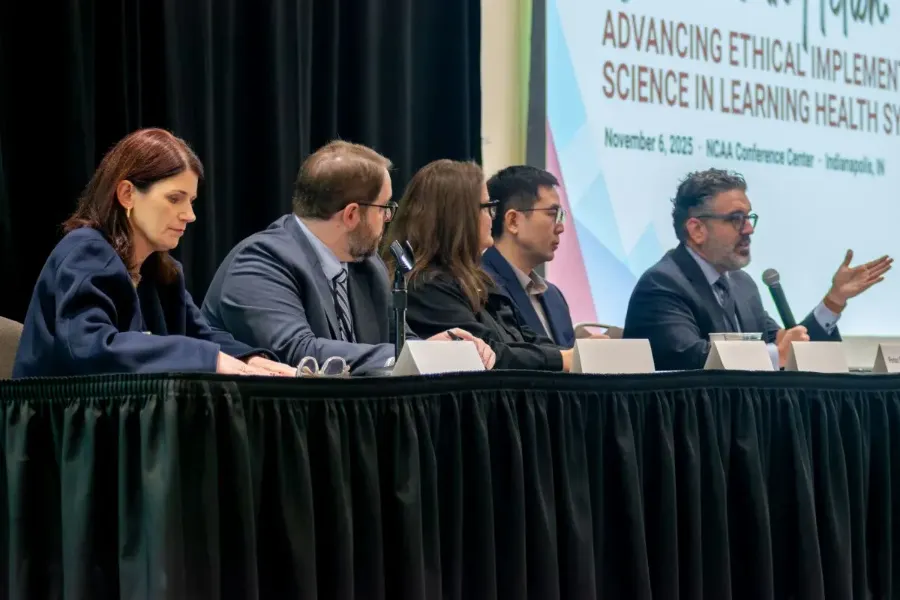
Three dynamic breakout sessions took place in the early afternoon with 14 scholars who discussed a range of LHS topics, such as scalability, utilizing cross-sector data and partnerships to improve population health, real-world implementation strategies and building a strong digital infrastructure. These sessions were followed by the afternoon’s keynote, Lisa Cooper, MD, MPH, Bloomberg Distinguished Professor and James F. Fries Professor of Medicine at Johns Hopkins University School of Medicine. Cooper spoke on the importance of using implementation science and community-based participatory research (CBPR) to address health disparities and achieve health equity, affirming, “There should always be a constant focus on equity — who is getting the intervention and who is implementing it.” She discussed the landmark RICH LIFE project (2015-2020), funded by PCORI and NHLBI, which used a pragmatic cluster-randomized trial design to test a patient-centered intervention for hypertension and heart disease, showing improved clinical outcomes and patient reports of care. Overall, Cooper shared that the project highlighted the need for ongoing engagement and adaptation to improve health disparities and the importance of integrating community input in intervention design.
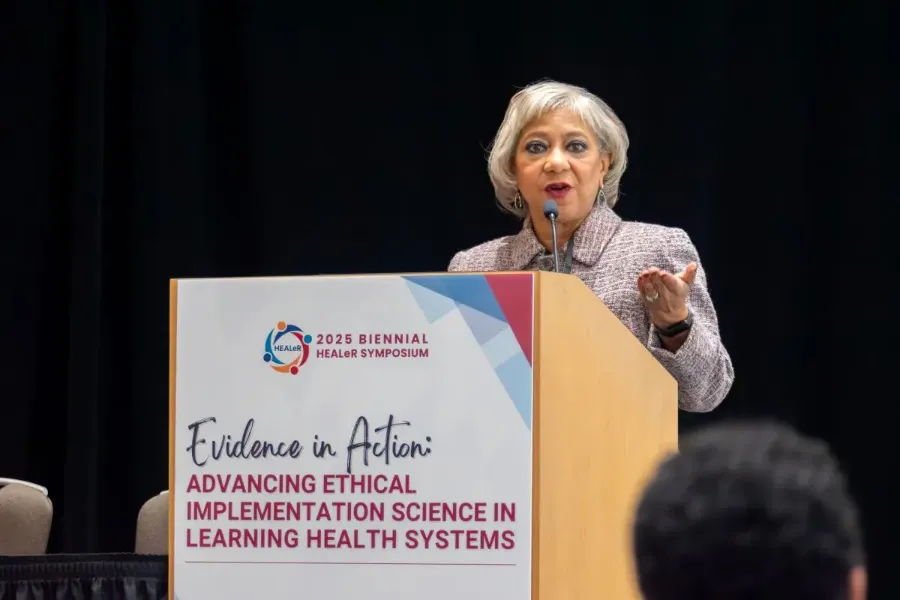
The featured plenary of the day, “Systems that Learn, Systems that Lead,” included earlier panelists, Bian and Embí, as well as Aaron Carroll, MD, MS, president and CEO of AcademyHealth, and Christina Scifres, MD, physician leader for LHS at IU Health. Rachel Patzer, PhD, MPH, president and CEO of Regenstrief Institute, presided over the session, leading the discussion on the mechanisms behind creating a “true LHS.” In the discussion, Bian remarked, “The leader needs to be a learner, and to be able to change the culture,” pointing toward the need for more conversations with clinicians working on the ground and reliable leadership investment in both data and people, in order for a true LHS to thrive. Later, Erika Cheng, PhD, MPA, HEALeR’s executive director, gave closing remarks, reminding everyone about the importance of connection and support for successful LHS work, and conference activities concluded with an engaging networking reception and panel on clinical artificial intelligence in learning health systems, hosted by Regenstrief Institute.
A majority of attendees who completed a post-conference survey reported they felt they gained valuable insights from the event that they could apply to their own work or research, and many respondents expressed strong enthusiasm about attending upcoming HEALeR gatherings. One attendee shared, “I really loved everything. I enjoyed that most of the sessions were panels and so collaborative.”
HEALeR remains committed to improving health for all those in our community and plans to continue supporting health systems researchers and clinicians with the development and implementation of projects aimed at improving access, experiences and outcomes for patients. Learn more about the group and upcoming events at healr.org.